Showing posts with label D.Appendix 1: Research for main product. Show all posts

Wednesday, 6 January 2016

Trailer Conventions; Similar to our Horror film ideas.


WORLD WAR Z


Through analysing various Horror film Trailers, as a group, we felt that the 'World War Z' trailer possess similar conventions to which we want to emulate for our own product. First of all, similarly to our main group idea, the sub genre of this particular horror film is a Zombie Apocalypse. The main plot or synopsis of 'World war Z' starts with a miracle drug, again similar to our idea, that results in the battle and survival of what little humanity is left. The protagonist(s) is portrayed by the main character 'Gerry Lane' played by Brad Pitt fighting to save the world and more importantly the survival of his family through finding a cure.

The mood of the film shown by the trailer at first is quite calm and cheerful, shown by a family sat in their car playing a game. After this the cars wing mirror is knocked off the mood quickly changes and from then on the audience are on edge this is reinforced by a jump scare when the police officer on the motorcycle is hit full force by a lorry/van, as if to suggest the driver of the vehicle has lost control and then the chaos begins. For our Trailer for 'The Few' we want to create a similar effect, a normal and calm atmosphere mood at the beginning that builds up to the event that starts the horror, or in this case the zombie apocalypse

Through the planning of our own trailer, for background noise and music we wanted an electronic noise or beat of some sort that starts and gradually speeds up as the cross cuts become quicker and the trailer reaches its climax. The starting background music/noise in 'World War Z' is again very similar to the sort of thing we want to do, it builds the tension well and fits in well with the theme/genre, enhancing the sense of suspense and fear.


THE CRAZIES


Similarities within The Crazies regarding horror trailer conventions which we would like to use within our own trailer is first of all the narrative structure. The normal narrative structure proposed by Todorov, Equilibrium, dis-equilibrium followed by Equilibrium is the normal narrative structure for normal Hollywood films. However the narrative structure for horror films is usually the opposite where they can start and end with a disequilibrium. This is what we plan to do in our own product.

Similar to World War Z the very beginning of the trailer contains a very calm and relaxed atmosphere to begin with but increasingly becomes more and more thrilling as it contains more horror. Also The Crazies trailer contains a number of quick jump cuts, also something we plan to do in our own product as it creates tension and reveals action without spoiling too much of the film. 


THE WALKING DEAD


The Walking Dead had heavily inspired our horror film and trailer idea so we decided as a group it was suitable that we used one of the season trailers. We chose season 3 of all the trailers as we felt that this season in particular reflects more similarities in the stories narrative. As the two previous horror tailors contain characters that are mostly related and are families, The Walking Dead almost contains an entirely unrelated group of survivors with the exception of a few, much alike our own product. 

Watching the trailer we aim to recreate some of the shots that the trailer has used, as the action scenes containing the zombies are very similar to what we had initially planned. Looking through these trailers it was easy to spot a similarity between them all as they first begin very calm and eventually become more chaotic. Also the scenes of the environment around the characters are also a very similar attribute we want to bring to our horror trailer as it gives the audience a better understanding of the surroundings. 

How has Research impacted our ideas

Tuesday, 3 November 2015

FDA UK Distribution Guide and Questions on Film Distribution


This Teaser poster was released in November 2012.This poster does not really tell the audience a lot about the film, or who is involved etc but this is why it is called a 'teaser'. It is meant to grab the viewers attention giving little away, to which the viewers will want to know more. All we can analyse is that this lady we presume is the 'victim' of the antagonist of the film which we can guess is within the darkness. From the Tagline at the top of the poster 'From the director of Saw and Insidious' the audience will be able to make their own predictions, that being good or bad, using these popular Horror film names and therefore what this film is likely to entail. From the Mise-en-scene and theme of the poster itself, looking as if shot by an old camera, or edited using a vintage filter and the fact that the lady is holding a match and not a torch we could also argue that the time period this film is set in is possibly quite early 60's/70's. As well as this there are no credits, names or date only 'Coming soon' which is also another technique that create suspense and leaves the viewers with yet more questions 'when will it be out?!'. The point of a Teaser Poster, as said before, is to intrigue viewers with only a glimpse of the film that is to be released.This allows their imaginations to run wild before any official poster or Trailer has been released, meaning when they are a lot of people will watch.

The first Teaser Trailer, First shown at New York's Comic-con in 2012,  kicked of the films Marketing Campaign in 2013. Throughout the Campaign the Film was heavily promoted as 'Based on a true story'.

This is the official film poster for 'The Conjuring' horror film. As you can see compared to the teaser there is a lot more detail in all aspects of the poster including Mise-en-scene (the image itself) as well as the credits, names and an extra Tagline. From this Poster the audience are now able to see the Antagonist, who was hidden from us in the teaser poster (darkness). However they purposely do not show her face as there still needs to be an element of mystery and suspense. We are more scared as an audience if we not able to identify with a character so their face is hidden, this means we cannot tell what they are, that being Human, monster, ghost etc which intensifies are fear. We are also shown a large doll sitting on the antagonists lap, meaning that this doll will play an significant role within the film that from the poster we can presume is an evil conduit. 
As for the Mise-en-scene we are placed in a dark and decaying room. Dark colours are used quite frequently in horror as they create an ominous and foreboding atmosphere, the only colours we can see on this poster is Black, Brown, Grey and a small amount of white. The setting of the room represents the antagonist, that if you have seen the film before, will know is dead evil witch who left a curse on her land and anyone who lived there would die. When she shows herself her skin is gray as she looks as though her body is decaying (similar to the room). 
The title is in a very aggressive and bold font in theme with the genre of the film and is placed in white to make it stand out in contrast to the dark colours in the back ground. 
On this poster there is also another tag line 'Based on the true case files of the Warrens' this creates an ever deeper sense of fear due to it saying that these events are real which we then as an audience are yes scared of but intrigued by. This is a angle many horror films have been using in order to create more interest e.g. The Blair Witch project and Paranormal Activity.
Finally in this poster there are the usual credits that name the actors involved (that we did not know before) as well as producers and directors.This helps the audience to decide whether it is a film they want to see based on whether or not they are familiar with these names and they like his/her work. There is also the 'Warner Brother Pictures' and 'New Line cinema' logos shown at the bottom which is relevant to the film as we know they where the Distributors.
However on this poster there is no release date only 'coming soon'. There is another official poster that does include the date but has a slightly different image that gives away just as much as the one I have analysed, just showing a more in depth picture of the setting of the film rather than the antagonist.


The Distributor for 'The Conjuring' was 'Warner Brother Pictures' and 'New Line Cinema'


The release date for the film was July 19th 2013 and was shown in 52 countries around the world. On its opening weekend in the USA 'The Conjuring' was shown in 2,903 theaters. 


Widest Release: 3,115 theaters
Close Date: October 31st, 2013
In Release: 105 days/15 weeks


Tuesday, 13 October 2015

History of Horror Summary 19th century- now

HORROR IN THE 19TH CENTURY

One of the main forefronts of the 19th century was the rapidly accelerating advances in scientific discoveries and inventions. This is within the field of many subjects including mathematics, physics, chemistry, biology which laid the groundwork for the advances during the 20th century. for example through Marie Curies discoveries in chemistry she coins the term ''radioactivity'' as well as Max Planck: law of black body radiation, the basis for quantum theory. As well as this the Industrial revolution began in Great Britain and spread to continental Europe, North America and Japan. The Victorian era was also notorious for the employment of children in work houses and mines as well as strict social roles including modesty and gender differences.

Roots in classical literature
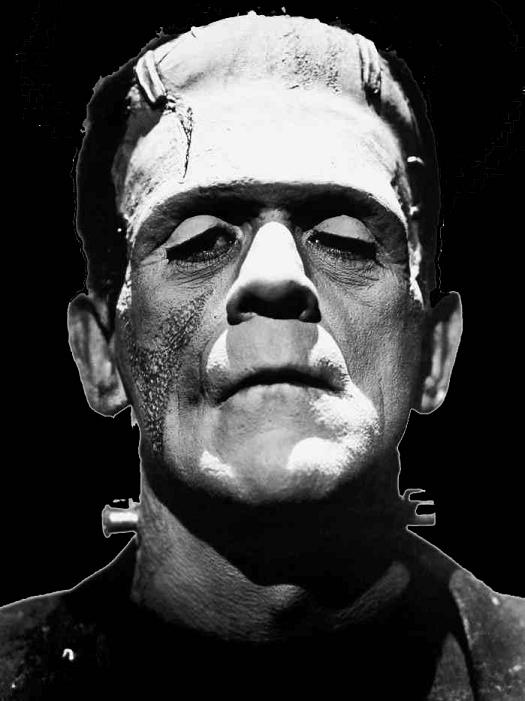
It was during this century that Gothic tradition blossomed into the modern genre we now call horror. Influential works and characters that continue resonating with film and cinema today saw their genesis in such works as Mary Shelley's Frankenstein (a scientist that creates a monster) in 1818, the works of Edgar Allan Poe, Robert Louis Stevenson's Strange Case of Dr Jekyll and Mr Hyde (1886), Oscar Wilde's The Picture of Dorian Gray (1890) and Bram Stokers Dracula (1897). Each of these novels created a basis for most horror films today and are still seen as vry iconic with many of them having modern re-imagining on stage and screen.



HORROR OF THE SILENT ERA

This is the era of films that did not have the technology for synchronized recorded sound or spoken dialogue.The dialogue was represented in these films by characters making physical hand gestures, through miming and title cards or what are known as 'on screen inter-titles'. This was used for narration, key dialogue and comments on the actions of the characters. Musicians were also used in accompaniment with the silent films to help portray the mood/atmosphere. This lasted from 1894-1920 before technology for synchronized dialogue was available.

At first it was the USA, Italy and France that were home to the biggest names within the film industry but due to the devastation in France and Italy during WW2 America took advantage and began patenting technology for film making. Eventually between 1907 and 1913 production companies moved to Los Angeles and Hollywood was born. 


German Expressionism 

This refers to a series of silent movies influenced by art movements of the time to do with expressionism and constructivism. Like silent films there was no dialogue, however the characters were represented more through mise-en-scene as well as gestures and movement. In silent films the characters body language and expressions where emphasised greatly in order for the audience to correctly read implied emotions and feelings. This specific time of film was made by German production companies from 1919 until 1933 when Hitler came into power.


Monsters and Mad scientists 1930's

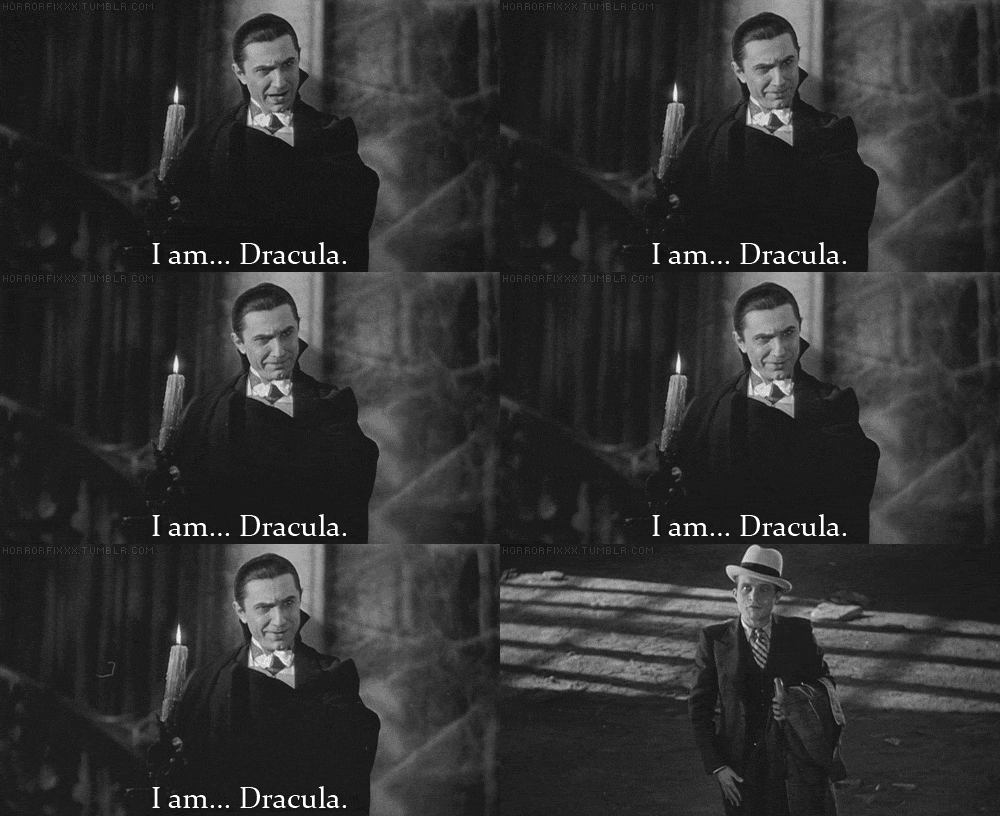
The 1930's is known is film for the re-birth of horror.This is when synchronised sound and dialogue could be added to films which added another dimension of fear making the films come to life and become a lot more realistic. Examples of monster and Mad scientist films of this decade are... 
  • Frankenstein
  • King Kong
  • Dracula 
  • The Mummy
With scientific discoveries still advancing at a rapid pace these types of horror kept in theme with these times. Frankenstein is a good example as it is about a scientist that actually creates his own monster. The scientists within these films are portrayed as insane and power hungry but some of the actual plots were based on future scientific predictions.The truth is stranger than fiction.

During the 1930's was the great depression, this led to an increase in popularity of horror films to do with the idea of 'escapism entertainment'. This type of horrors were a sub-genre called supernatural' horrors which the audience said allowed them to forgot about their concerns for a few hours.


HORROR IN THE 1940's: THE PRIMAL ANIMAL WITHIN...

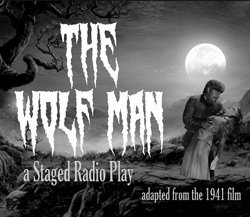
The 1940's were host to WW2 and  this was a large factor in shaping some of the changes and development in horror during this period. With horror banned in Britain, America took over the horror Genre. During this time the 'wolf' became a key icon. This is actually due to the war itself and the Nazi's who were often referenced to by Hitler as 'Wolves'. As well as this Adolf in old German means noble Wolf. Even propagandists depicted Hitler himself as the 'Big bad wolf' of fairy tales. It seemed the wolf represented the predators hidden in the corners of public consciousness. It was therefore no surprise that 'Universal' home of the monsters during the 1930's picked the wolf as the go to figure of menace for the late 1930's and early 1940's.

The film 'The Wolf man' was released in 1941 written by Curt Sidomak a man who fled the Nazi's himself in 1937. The film began the Hollywood phenomenon that is the 'Werewolf' bringing together the ideas we associate with these creatures today for example, full moons and silver bullets. The Wolf man is one of the three top-tiers universal studio monsters without a direct literacy source.

In 1941 Universal released 'Cat people'. This film was classed as a Psychological thriller and took a different take than the one 'The Wolf man' took. It was a great success making a profit of $4 million off of their original $134K original budget. The particular theme of the film were based on Women but portraying them as dangerous aggressive creatures. This may relate to how women were treated after the war. When the Men returned women were laid off from their jobs in order to give them back to the Men.


HORROR IN THE 1950's: MUTANT CREATURE AND ALIEN INVADERS

One of the first Mutant movies to be created was the iconic Godzilla. Godzilla was produced in the 50's by Tomoyuki Tanaka. Since the original in 1954 there have been various remakes and sequels of the Godzilla franchise with the latest remake of the film being in 2014. Today Godzilla is known universally as one of the most popular and leading Mutant movies created and highly regarded by the horror genre. Another film released was 'Flight to mars' in 1951. Which was based on American scientists expedition to mars only to find out is inhabited by an underground dwelling 'Aliens'. 

During the 1950's Radio active weapons and atomic bombs were in commission. As well as this NASA were able to explore a lot more of space with advancing technology and discoveries. These events within this decade could have potentially impacted the Mutant/
Alien horror genre. Because horror films of this period kept to the same central theme it may have created another dimension of fear to the audience. If they were aware of these advances in science and technology of the time it would of made these horror films seem a lot more realistic and the thought of the unknown moving into the known e.g. what we might find in space or what atomic bombs and radio active energy could create (e.g. monsters). 


HORROR IN THE 1960'S: GHOSTS, ZOMBIES SATANISM AND YOUR FAMILY

Horrors of the 70's reflected psychological fears; one of the reoccurring fears being children and the fear of child birth. Psycho is a good example that portrays psychological issues the killer is Norman bates, a peculiar young man who has been dominated by his invalid mother all of his life. This psychological torment creates a cold blooded killer. One of the most prominent films in horror to do with children was 'The Exorcist'. This film was actually banned in Britain until 1999 and was  voted as the scariest movie of all time. These types of horror had a particularly strong effect due to them using children who we would normally associate with innocence and being pure but they are transformed into evil conduits for demonic spirits to possess and control. Satanism along with the crumbling family image becomes the source of fear, portraying to the audience that evil can be found closer to home than they may of thought. As well as this many ghost films appeared within the 60's this being a reaction to the creature features of the 1950's.


  • Psycho (1960)
  • Night of the living dead (1968)
  • The Exorcist (1974)
  • Carnival of souls (1962)


HAMMER HORROR

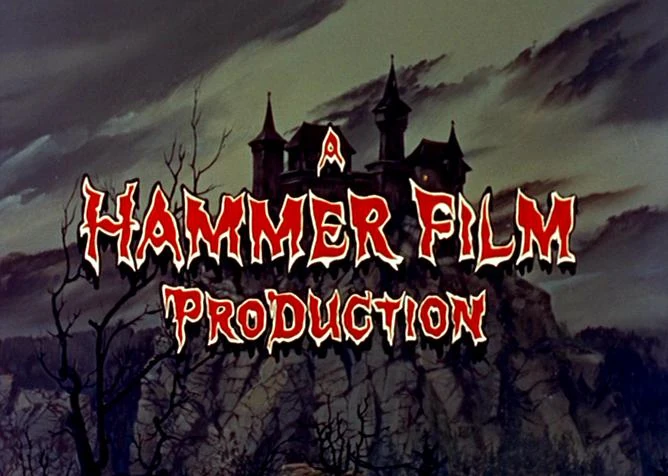
Hammer film productions is a British film production company founded on the 5th of November in 1934 by William Hinds whose stage name was William Hammer (which was taken from the area he lived in London which was hammer smith). 

The company were best known for a series of Gothic horror films they produced during the mid 1950's to 70's. Although they also covered other film genres during Hammer film productions more successful years they dominated the horror film market with worldwide distribution and considerable financial success. During the 1970's the saturation of the horror film market by competitors and the loss of american funding forced changes for the previously successful hammer productions. This led to the company declaring bankruptcy in the mid 1980's.

In may 2008 the company was sold to a dutch media tycoon John de Mol who planned to spend $50 million on new horror films. Since the companies reopening it has produced feature films 'Let me in' (2010) 'The president' (2011) and 'The women in Black' (2012).


  • Quartermass experiment (1955) Started as a Sci-fi thriller series by the BBC to which Hammer Film Productions bought the rights to make adaptations.
  • Remake of Dracula (1957) ...Low budget but great success.
  • The Mummy (1959) ...Low budget but great success.
  • The curse of Frankenstein (1958)...Great success.
  • The Abominable Snowman (1958) ...Not as successful as their previous films.
  • Dr Jeykll and Mr Hyde (1960) ...Low budget, £30,000 loss at box office.
  • The phantom of the opera (1962) ...failed at the box office but gathered a cult following.


SLASHER MOVIES AND BODY HORROR


Slasher Movies were a sub genre horror from American Horror films. The Slasher horror film trended after the successful release of Halloween in 1978 which led to a lot of copycats. 

The four plot rule for a horror film to be classed as a Slasher consist of..
1. A traumatic event in the past that creates a psychopathic Killer.
2. Killer returns to event on the specific date.
3. Killer brutally kills groups of teenagers of both sexes.
4. Final girl survives normally portrayed as androgynous and virginal.


  • Friday the 13th (1980)
  • A nightmare on Elm Street (1984)
  • The Slumber Party Massacre (1982)
  • The Prowler (1980)
  • Maniac (1980)
  • The burning (1981)
  • Halloween (1981)


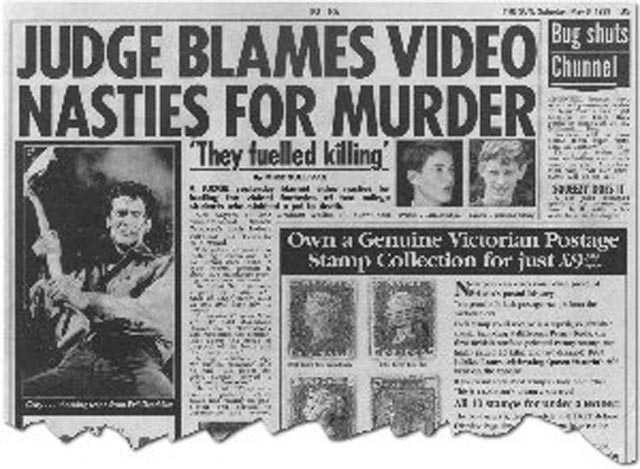
HORROR IN THE 1980's: VIDEO NASTIES

Mutilations of bodies. Cannibalism. Gang rape. That is what a video nasty is.” So said Graham Bright, the Conservative MP who introduced the Private Member’s Bill that was passed as the Video Recordings Act (VRA), 30 years ago. Giving statutory power to the British Board of Film Classification (BBFC), the act made it illegal to sell or supply a video that the board hadn’t examined and classified.

Video Nasties were bloody accidents were distributed on tape, and were available to view, repeatedly, by anyone with access to a VCR and the tape. This made a mockery of the ratings system, and it quickly became apparent that relatively young children were exposed to eye-gouging, fingernail-pulling, exploding heads and tree rape, courtesy of their older brothers and sisters, or even careless parents.In the UK this led to the notorious "Video Nasty Debate", as the tabloid press screamed with headlines of the "Sick Films Warping A Nation's Young Minds" variety. MORAL PANIC!

  • Nightmare on Elm street
  • I spit on your grave 
  • The Evil Dead
  • Zombie flesh eaters
  • Nightmares in a damaged brain
  • The last house on the left


HORROR IN THE 90'S: IRONIC HORROR

The 90's were home to the ironic horror films, this simply means they were aware of themselves. By this we mean that they involve the use of horror parodies and are aware of the codes and conventions of the stereotypical horror genre.

Wes Craven's scream (1996) is a horror film that is often celebrated for its willingness to portray characters who we have seen in horror films. It is credited for reviving the horror genre after a string of disappointing sequels and direct-to-videos releases in the 80's and 90's which left many fans and critics to believe that the once creative and lucrative genre was dead. The film wound up the highest grossing slasher film of all time earning $170 million worldwide.

To call scream original is perhaps misleading. Though many critics and fans admire craven for creating a fresh genre picture, the film itself is arguably original for owning its unoriginality. Much of the film contains inter textual references to horror and these allusions give the film a post-modern self awareness.


HORROR IN 2000: GORE-NOGRAPHY AND TORTURE PORN

The term torture porn was coined by David Edelstein in January 2006 and suggested we all engage in this type of film on a purely visceral level (relating to deep inward feeling) - all conditions of story and character aside. This suggests we as an audience watch this type of films for a physical reaction rather than an emotional one, much like porn itself. 

During the 2000's many films were released containing a lot of startlingly graphical scenes of torture. Torture was not new to films but the way it is was now being portrayed with the technology available made it appear very real. during this time period it was revealed on global news that the US army had been accused of torturing their prisoners making torture now seem again real and topical!

Horror films of this decade were striving for aesthetic realism, designed not to look comical or over the top but as realistic as they could get to the event (e.g a limb being chopped off) as possible. Details in every scene so nothing is left to the imagination, they are subject to every gory scene.

One of the first Pioneers for torture porn was Eli Roth. His first feature Cabin Fever released in 2002 involves a flesh eating virus attacking a group of young college graduates, one scene consists of a girl shaving her leg only to realize she is shaving off her own skin...and we see all of it!

However in 2007 a film called 'Captivity' about a girl who is tortured displayed very graphical posters that were criticized and accused of 'crossing a line'. The posters where taken down and when realized the film flopped.

Although Torture porn made it into several popular budget movies and TV shows, the demand for it might be argued to have fizzled out by the end of the decade.


  • Saw (Wan 2004)
  • Hostel (Roth 2005)
  • Saw II (Bousman 2005)
  • Wolk Creek (Mclean 2005)
  • Hotel II (Roth 2007)
  • Saw V (Hacki 2008)
  • Hostel III (Spiegel 2011)
Monday, 5 October 2015

Narrative theory in relation to Halloween (John carpenter 1978)

What is meant by the term Classical Hollywood Narrative? How useful is this narrative theory and does Halloween follow the CHN?

The Classical Hollywood Narrative was suggested by Todorov and it proposes that all narratives start with an 'Equilibrium' or Status quo, this is where all forces are in balance and every is has as it should be. This is then followed by a 'Disequilibrium' where the original equilibrium is disrupted by an event. This set off a chain reaction of events. We are then faced with a 'New Equilibrium' where the problems resolved and order is restored. I feel the CHN is a useful theory for understanding media texts as most do follow this kind of Narrative. It makes story lines and plots much easier to follow and gives the audience a rough idea of what will happen.It is a good narrative basis for all media texts. However the same can not be said for horror films. The horror genre tries to stay clear of the CHN this is because the horror audience do not want to see a 'happy ending' or what we class as a normal story 'plot' as this would be predictable and quite boring considering the context of horror films. In relation to Halloween it can be said that this too does not follow the CHN. This is shown first of all at the start of the film where we are shown a murder that turns out to be a little boy (Mike Myers) murdering his sister.This means Halloween actually starts with a disequilibrium. As well as this there is no 'new equilibrium' at the end of the film, nothing is resolved as the villain ' Mike Myers' doesn't die and he in fact escapes. No one is safe and all the characters are all still in danger with him on the loose. Halloweens structure completely goes again the CHN.


What are Propps various character types and how did he decide on the list? How useful are his character types for understanding media texts and which of Propps characters are present in Halloween?

Vladimir Propp identified 8 character roles and 31 narrative functions. He did this by examining hundreds of examples of folk tales to see if they shared any structures.


I feel the characters Propp identified are useful as they can be applied to all types of narrative. Most of these characters can be spotted in most films including horror films and even in narratives such as TV news programmes. However I think nowadays these 'roles' aren't as distinct and a lot of characters can be identified as playing more than one character type. For example in The Crazies, we can not identify one specific villain, we don't actually see the villain, this being the government and scientists who made the biological weapon. As well as this the character Russel who is the deputy is shown to be a helper, Donor, and the false hero.Although Propps character types is useful for identifying and understanding the different characters within films it is not particularly suitable for understanding the media text as a whole, it is limited in its use when it comes to analysing and predicting what happens in the film.
In relation to the film Halloween most of these character types can be identified. Mike Myers is clearly the villain, who is portrayed to be 'pure evil' and kills many people. As for the Hero this is Laurie, this is shown by her androgynous characteristics and when she fights back again Mike and gets away without being killed. The helper of the film could be identified as the Psychologist who has worked with Mike Myers since he was little. He knows Mike better than anyone and tries to track him and down and get him put away again before he kills anyone else. The psychologist could as be named as the dispatcher as he tells and instructs the local police officer to keep watch of Mike Myers house and tell him of the danger the Town is in.


What is meant by the  term Binary Opposition and how useful is it for understanding media texts? List five examples of Binary Oppositions that is shown in Halloween. 

Th Binary Oppositions theory was suggest by Claude-Levi-Strauss. This theory suggests that within a narrative structure two opposite sets of beliefs and values are used in contrast with each other too reveal a structure of a media text. Using Binary Opposites within films makes it a lot more interesting for the viewer as they are able to look for the 'deeper' meanings,making it a lot more three dimensional rather than just what we physically see on the screen. I think the binary opposition theory is very useful for understanding media texts as it helps the audience to identify the underlying central conflict of the media text and the contrast of the oppositions make each force or feeling a lot more intense and meaningful e.g. Good is emphasised more when there is bad. Halloween shows a variety of binary oppositions throughout the film. First of all there is the obvious 'Good vs Evil'. The good that is represented in this film is done through Laurie and also the Psychologist as these are the characters they try to stop the 'Evil', the evil being Mike Myers who is the cold hearted 'inhuman' Killer. 
A second opposition we can identify is 'Known vs The Unknown'. The Unknown is represented by the mask in the film which is worn by Mike Myers and hides his face throughout the majority of the film. The use of this mask is to create anxiety and tension as not being able to see the face of the killer makes it a lot more frightening to the audience as they can not identify with the character, Not being able to see his face, which we as humans naturally examine to read emotions and behaviours makes the killings seem very cold and brutal. This is contrasted by the 'Known' that are the characters without masks, we are able to read them and their emotions and see how they feel and react to every scary and challenging situation throughout the film.
Another is 'Past vs Present'. We can identify this at the start of the film where we are shown a 'flashback' to Mike Myers first killing on Halloween night where he murders his own sister. After this we are shown Mike escaping the asylum which he was imprisoned in since the murder. He returns to his home town and continues his killing spree on Halloween night. This is an important date in the film because it important to Mike Myers and is shown to murder people both in the past on Halloween night and in the film 'the present'.
Innocence (virginal) vs Promiscuity can also be seen as an opposition. The main character and hero 'Laurie' is shown to be a very uptight and square character. She is intelligent, very much into her school/college work and we also know she is a virgin. Within the film Laurie's friends are all very idiotic and are shown  constantly being drunken or being promiscuous. It happens to be that these specific characters are all the ones that are killed. John Carpenter describes them as being 'distracted' so they do not see there killer coming. However Laurie who is portrayed as very virginal and sober is very aware of the killer and is able to escape her killer. 
Finally a fifth opposition we can identify is 'Light vs Dark'. The light represents safety, Mike Myers does not attack the other characters in the day time where his chances of being caught will be a lot higher. He attacks them in dark of night where he wont be seen and they wont see him coming, therefore the dark represents 'Danger'. 


''A chain of events in a cause-effect relationship, occurring in time and space''...How useful is this quote from Bordwell and Thompson for understanding media texts?

This quote in relation to Narrative theory suggested by Bordwell and Thompson I feel is one of the most useful theories when trying to understand media texts. This is because it allows the audience to analyse and deduce their own reason's for why events happen and how they have occurred. It allows us to not visually see but mentally see what has happened both on and off screen for specific events to take place ''chain of events in a cause-effect relationship''. One events leads to another and so on. It means the audience understand the media text they are watching in a lot more depth, they are constantly imagining what is not shown but described by the characters. 
In relation to the horror film Halloween one of the events we do not see but know has occurred is Mike Myers time within the Metal Asylum/Prison. We know here he has received a lot of treatment and counselling here since childhood by the same Psychologist 'Dr. Loomis' who is one of the main characters within the film. We know this as Mike's tendency's and 'inhuman' characteristics are described by this psychologist as he knows him better than anyone. This fills in our 'gap' or lack of knowledge on what happened to Mike after murdering his sister all of those years ago. As well as this we also know the Myers house has been abandoned since the brutal killing as we are shown a scene of Dr. Loomis entering the empty home and also by the locals neighbors who do not want to go anywhere near the house. 
This theory helps us to identify why each event has happened in Halloween.For example If Mike hadn't of killed his sister and been in a mental institution all of his life he would not of come home and killed Laurie's friends. Another example is that because Dr. Loomis was trying to find and catch Mike if he had not of been investigating and found out where Mike Myers was, he wouldn't of been able to save Laurie's life by shooting him.
  

History of Horror - 1980's Video Nasties